The Muddy Threshold: Stained Glass for Boot Rooms, Porches and Utility Corners

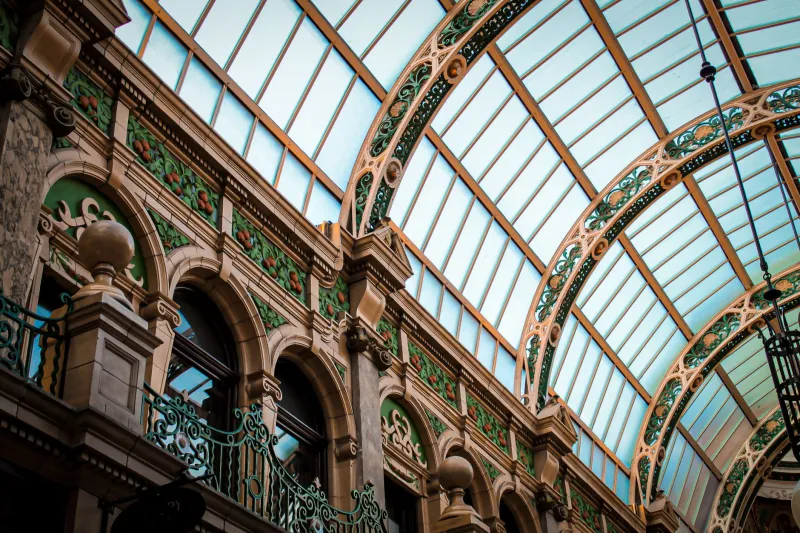
Photo: Petar Milošević, CC BY-SA 4.0, via Wikimedia Commons
There is a particular smell to a good boot room. Wet waxed cotton, muddy rubber, a faint whiff of the dog. It is not the room estate agents linger in, but it is the room that decides how the rest of the house feels. Get the threshold right and the kitchen stays cleaner, the hallway stays calmer and the coats stop colonising the banister.
That makes the boot room, porch or utility corner a surprisingly good home for stained glass. Not a grand church window in miniature, and not a delicate thing that will wilt at the first sign of a damp November. A small, hard-working panel can give privacy at the back door, borrow colour into a grey corner and turn a utility wall into something you actually notice. The trick is to design for the room’s real job rather than a showroom version of it.
Design for the job, not the showroom
Start with where the light comes from and what the room needs to hide. A porch sidelight next to the front door may need to obscure the inside of the house while still letting in enough daylight to find a key. A utility-room window above a sink may need to soften a view of the bins without turning the room into a cave. A glazed internal door between the boot room and the kitchen is a different brief again: here the panel is about borrowed light and a bit of visual separation, not weatherproofing.
In practical terms, that usually means a panel with a busy or textured centre and a quieter border. Opalescent glass, seedy glass and lightly textured cathedral glass all obscure detail without blocking light. If the panel sits low, where muddy hands and wet sleeves will pass it, keep the lower third denser and the top third lighter. That gives privacy where it matters and keeps a glow above head height.
The panel also needs a sensible home. A stained-glass window in a porch will collect dust, pollen and the occasional spider, so detail should be bold enough to read from a metre away and simple enough to wipe. A panel buried behind a coat rack is a waste of everyone’s time. Put it where the daylight actually lands.
Finishes that can take a scuff
The traditional lead came panel is still the right answer for many porches and boot rooms, provided it is properly made. Good cementing, a sealed perimeter and sound putty work matter more than the style of the leading. A well-built panel will cope with the temperature swings of an unheated porch; a poorly built one will let water in at the edges and then complain about it for years.
Copper foil can work beautifully for smaller internal panels and cupboard doors, but in a damp porch the extra protection of lead came and a robust frame is often the safer bet. If the panel is going into an external door, ask how the frame will drain and how the glass will be protected from standing water. Avoid delicate painted details on the face that will be wiped, knocked and generally leaned against. If you want colour, let coloured glass and textured glass do the work.
Where the panel sits behind an existing window, encapsulation is possible, but it is not a magic trick. The unit needs to be specified for the extra weight, the stained glass needs to be stable, and the cavity needs to be handled properly. A cheap sealed unit with a panel dropped inside is a recipe for condensation and regret.
Ventilation is part of the design
Condensation is the quiet enemy of the boot room. Wet coats and boots release moisture, and a chilly porch is exactly where that moisture likes to settle. Stained glass cannot solve a ventilation problem, but it can make it worse if it is installed like a sealed lid.
Do not block existing trickle vents, air bricks or gaps under doors. If you are replacing a window, keep a ventilation path and make sure the new frame does not seal the room tight. A stained-glass panel set into a frame with a small air gap and proper drainage will fare better than one squeezed into a cavity with nowhere for moisture to go. In a porch, a stable background temperature also helps. If the room is permanently cold and wet, fix that first. The glass will thank you.
Privacy without a cave
Boot rooms are often overlooked, which is a polite way of saying the neighbours can see straight in. Stained glass is excellent at solving that without the dead-eyed look of frosted film. Use dense opalescent glass in the centre and a clear or pale border to keep the edges bright. A horizon line of pale green or amber near the top can lift a low ceiling without giving away the view.
Light control is the other half of the brief. South-facing porch windows can be dazzling in summer and gloomy in winter, so choose colours that hold their own in both. Slate blue, moss green, amber and chalky white are forgiving in UK daylight. Very pale yellows can disappear on a grey day; very dark blues can turn a small utility room into a tunnel. Ask to see samples against the actual window before you commit.
Motifs from the yard, not the gift shop
The best boot-room motifs come from the room itself: hedgerow berries, blackthorn, ivy, fern fronds, seed heads, a trug, a spade, a watering can, a row of Wellington boots. The trick is to stylise them. A single pair of wellies in the bottom corner is charming. A repeating border of wellies, forks and flowerpots starts to look like a garden centre carrier bag.
A hedgerow panel works particularly well because it can be read as abstract pattern when the coats are hanging in front of it. Think thorny lines, small berries and layered leaves rather than a detailed illustration. Garden tools are better as simple silhouettes: the curve of a fork, the lip of a trug, the spout of a watering can. Keep the palette tight. Moss, damson, rust and a little clear glass will do more than a full rainbow.
Small panel, sensible maintenance
A boot-room panel should be easy to live with. Clean it with mild soapy water and a soft cloth, not a scouring pad. Check the putty and the frame once a year, especially after a wet winter. If the panel is in a door that gets slammed, make sure the frame is sound and the glass is not taking the shock. A small crack at the edge is easy to ignore until it is not.
None of this is glamorous, which is rather the point. The boot room is where the house puts its shoulders down. A stained-glass panel there is not a showpiece; it is a quiet bit of colour on a dark morning, a bit of privacy from the neighbours, and a small daily reminder that even the hardest-working corner can be worth looking after.
At H&P Stained Glass, we like a brief that starts with muddy boots and ends with something you are glad to see when you come in. That is the muddy threshold doing its job.