Light on the Landing: Stained Glass for the Terrace Stair Window
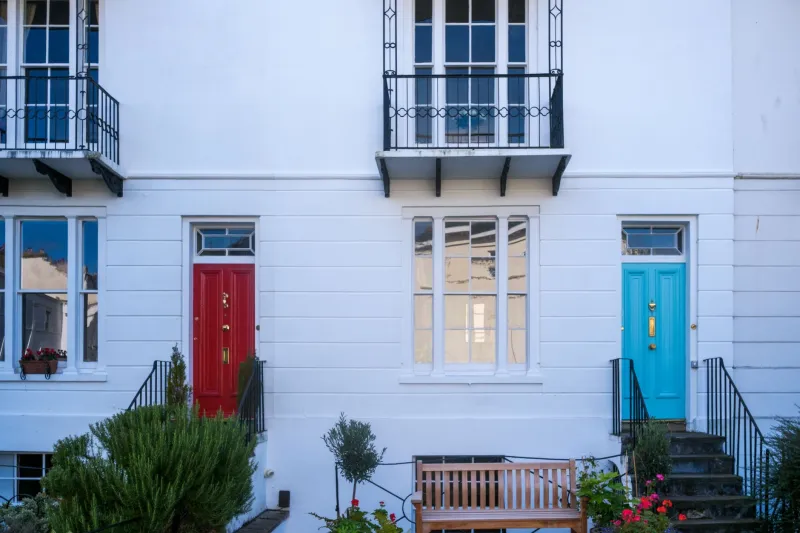
Terrace stair windows are the Cinderella of the British home. They are tall, narrow, often painted shut, frequently obscured by a bit of old net curtain, and positioned exactly where nobody sits down to admire them. And yet they do a serious job: they light the stairs, the landing and the hallway below. Get the glass right and an overlooked slot becomes the quiet centrepiece of the house.
Start with the sightline, not the pattern
A stair window is rarely seen straight on. You meet it from below, from halfway up, from the landing, and from the turn of the stairs. That changes how a design should be drawn. Patterns that look wonderful flat on a table can become a jumble when viewed at an angle, and motifs that are too small will read as visual noise from three metres away.
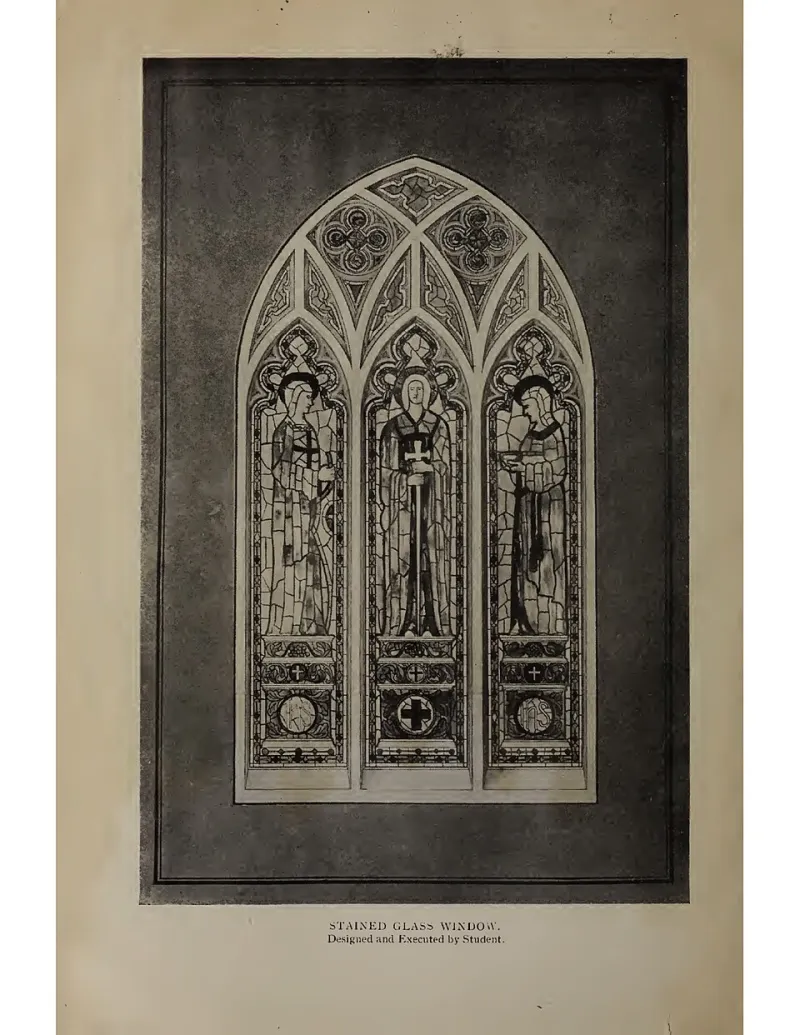
Think vertically first. Long stems, slim borders, stacked geometric repeats, a single rising motif or a column of simple shapes will suit the proportions far better than a busy pictorial scene. If you want figures or birds or flowers, give them room and let the lead lines reinforce the upward movement rather than cutting across it. A good rule of thumb for terraces: fewer elements, larger shapes, stronger rhythm.
It also helps to consider the view from the front door. Many hallway windows are glimpsed through an internal door or reflected in a mirror. A design with a clear vertical spine will still make sense when it is only partly visible. That is architectural problem-solving in glass, not just decoration.
Colour without blocking the light
The classic mistake with a dark terrace hallway is to treat the stair window as a chance for maximum colour. Rich reds, deep blues and dense opalescent glass can be beautiful, but in a narrow stairwell they can also make the space feel like a coal cellar. The aim is to borrow colour into the hall, not to stop daylight at the sill.
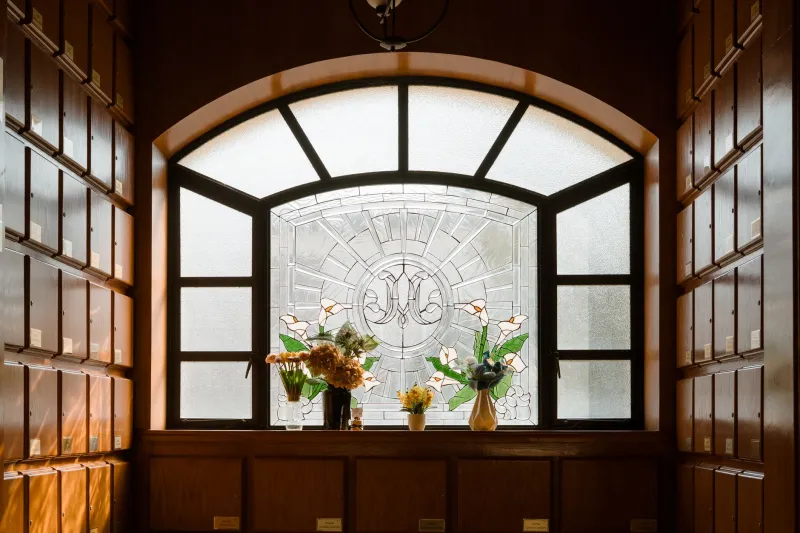
A practical approach is to keep the background light and let the colour do the talking in smaller areas. Clear or lightly textured glass, pale amber, soft green, gentle gold and a little clear seedy glass can throw colour without shutting out too much light. If privacy is the issue — and on a terrace it often is — use obscured or textured glass in the lower sections, or a design that places denser colour where neighbours might look in and lighter glass higher up.
Warm tones are especially flattering in hallways, which tend to be cool and shadowy. A little amber or gold can make woodwork glow and take the edge off a grey British morning. If you want one strong colour, use it as a repeated accent rather than a full flood. The window should feel like a lantern, not a wall.
Safety glazing, ventilation and the unglamorous essentials
Stained glass in a stairwell has to be more than pretty. It is often within reach of a landing, beside a turn in the stairs, or low enough to be knocked. Safety glazing is not optional in these positions. Toughened or laminated glass may be required depending on the location and the building regulations that apply; for leaded and stained-glass panels, a laminated protective sheet or a secondary glazed unit is often the sensible route. A reputable maker will talk you through the options rather than fudge the question.
Ventilation matters too. Older terrace windows often had a trickle vent or a small opening light, and blocking that up can create condensation and stale air in the hall. If the design fills the whole frame, think about how the room will breathe. Sometimes a ventilated secondary glazing system or a slim trickle vent can be incorporated without spoiling the look. In a bathroom or kitchen nearby, that is especially important.
Then there is access. How will the glass be cleaned? Can you reach it safely from the landing, or will it need a pole? If a panel is ever damaged, can it be removed without taking half the staircase apart? A simple hinged or removable frame, or a design that allows individual panels to be lifted out, can save a great deal of grief later. It is worth asking these questions before the cartoon is drawn, not after the lead has been soldered.
A quiet centrepiece, not a shout
The best stair-window commissions tend to be restrained. They add colour where the hallway is dull, privacy where the street is close, and a bit of craft where the architecture has been ignored. They do not try to compete with a church east window. They work with the vertical proportions, the direction of the light and the way people actually move past them.
So if your terrace has one of those tall, narrow windows that nobody has looked at properly for years, give it a second thought. It may be the most rewarding piece of glass in the house — and the one that greets you every time you come home.