One Night at a Time: A Stained-Glass Advent Trail for Your Street
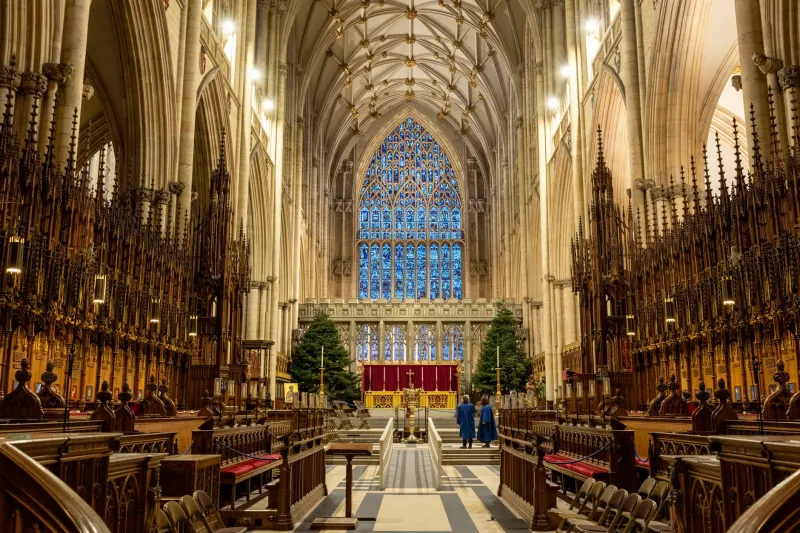
Advent Sunday falls on 29 November in 2026, and across the UK the run-up to Christmas is increasingly marked by something quieter than a supermarket advert: a trail of lit windows. One house displays a star. The church hall has an angel. A shopfront shows three kings in coloured glass. Neighbours walk the route after dark, counting down the days one pane at a time.
The idea is simple, but the glass needs thought. A stained-glass Advent trail is not just twenty-four pictures blu-tacked to a window. It is a small piece of street theatre, and it has to survive rain, frost, condensation and the occasional enthusiastic dog walker. Here is how to make a sequence that looks lovely, stays put and leaves every original window exactly as it was.
Start with the route, not the glass
Before anyone cuts a piece of glass, sketch the street. Number the windows from 1 to 24, or whatever your trail can support. Mix detached houses, terraced fronts, a church porch, a café, a community hall and a shopfront if you can. The best trails feel like a walk rather than a list, so think about pavement width, street lighting, steps and whether a buggy or wheelchair can get past.
Consent matters. Ask every household or business before adding them to a printed map or a social media post. Keep a simple list of who is displaying and who is happy to be photographed. If the trail passes a church, check whether the building is listed or in a conservation area; fixing anything to historic fabric is a different conversation from leaning a panel in a vestibule.
Designing a sequence that reads in the dark
A trail works best when the panels feel related without being identical. Pick a palette early: deep cobalt, amber, ruby and a little clear seeded glass can carry a whole story. Use a consistent border width or a repeated motif, such as a small star in the corner of each panel, so passers-by recognise the sequence.
Then decide on the narrative. You could follow the traditional Advent themes, build a Jesse tree, show a single figure journeying across the street, or go abstract with a different colour and shape for each night. A community trail often works well when each maker contributes one small vignette rather than one person trying to design everything. Give contributors a fixed panel size, a shared colour palette and a clear brief: one motif, bold shapes, not too much tiny detail. Stained glass is read from a distance, especially in December dusk.
Materials for damp, dark British winters
Outdoor glass in the UK has to cope with sideways rain, frost, condensation and weak winter sun. For temporary panels, lead came is usually the more forgiving structural choice; copper foil is lovely for indoor work but can be more vulnerable at joints if a panel is repeatedly moved or exposed to moisture. Whichever method you use, seal and reinforce the panel properly, and keep the weight in mind if it is going to hang.
A simple timber frame with a drip rail, a small ventilation gap and stainless-steel fixings will serve you better than a tightly sealed sandwich that traps damp. If the panel sits in front of existing glazing, leave an air gap. If it is within reach of the pavement, consider a protective sheet of clear polycarbonate or laminated safety glass in front, especially for shopfronts and church halls. Battery-powered LED strip or a low-voltage spotlight can light the glass from behind without running mains cable across a wet windowsill.
Revealing without wrecking the glazing
The golden rule is no drilling, no adhesive on old glass and no pressure on historic lead. For homes, a removable timber shadow frame wedged gently into the window reveal with foam pads is often enough. For shopfronts, a freestanding frame or a tension-fit display system is kinder than screws. Churches and halls may already have noticeboards, screens or portable easels that can hold a panel safely.
Reveal one piece each night with a simple fabric blind, a removable card cover or a hinged wooden shutter fixed to the frame rather than the building. If you want a low-effort option, hang the panel behind a curtain and draw it back at an agreed time. Keep the mechanism simple enough that a neighbour can manage it on a wet Tuesday, and make sure someone has a spare key or a step-free alternative if the display is in a porch.
The small print of a street trail
Print a map if you can, but do not rely on it alone. A QR code on a laminated card in one or two windows helps people find the route without peering at a phone in the rain. Tell participants when to switch on and switch off, and agree a finish date so the trail does not become a permanent installation nobody meant to maintain. Check whether your council or insurer needs notice for a public event, and keep cables, weights and trip hazards well out of the way.
Most of all, leave room for the homemade. A perfectly matched set of panels is lovely, but a street trail lives on the fact that number 14 has a slightly wobbly donkey and the church hall has gone for an abstract sunrise. Stained glass in December is not really about perfection. It is about colour arriving in the dark, one window at a time, and a street remembering to look up.