The Half-Moon and the Hallway: A 1930s Stained-Glass Field Guide
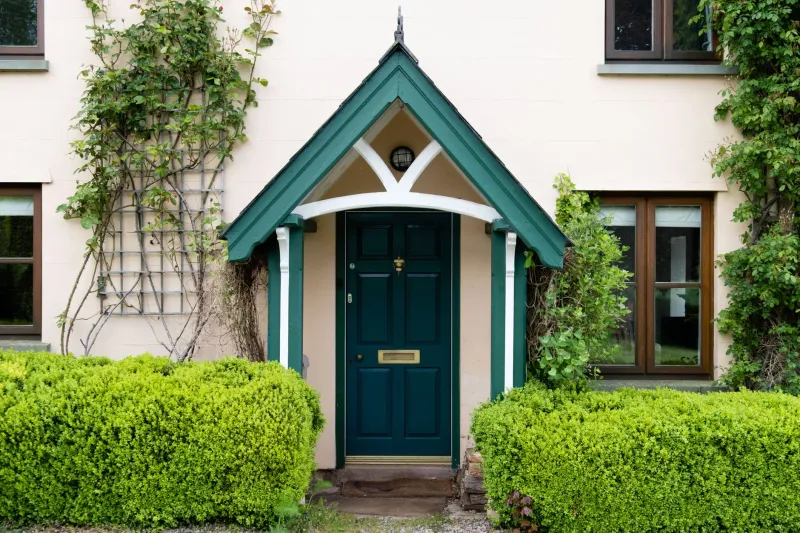
The 1930s semi is a quietly confident thing: bay windows, brick arches, a front door set back behind a little porch, and often a fanlight doing more decorative work than the rest of the street put together. If you live in one, you may already have spotted a sunburst over the door, a leaded stair window, or a band of coloured glass that looks original but might not be. The trick is to work out what you have before you decide what to do with it.
Start with the frame, not the glass
Original interwar glazing usually comes with clues. Crittall steel windows were common in the 1930s, especially on porches, stairwells and later extensions, and their slim metal sections changed how much glass a wall could carry. Timber casements were just as widespread. Look at the lead came: old lead tends to be thicker, softer and slightly uneven, often painted over many times. The glass itself may have tiny bubbles, a gentle ripple or a faint greenish edge. Later replacement panes tend to be flatter, cleaner and more uniform.
Check the frame before you fall in love with the glass. Rust, rot, loose putty and rattling panes tell you more about what needs doing than the pattern does. A wobbly fanlight is not necessarily a reason to replace it; it may simply need re-puttying and a few new ties.
The motifs that say 1930s without shouting
Sunbursts and rising suns are the obvious ones, especially in semicircular fanlights above front doors. Rays, chevrons, stepped borders and simple floral roundels also turn up. So does textured clear glass: hammered, reeded, seedy or obscured, often doing more work for privacy and light than any coloured piece.
A word of caution: not every coloured pane is original. Plenty of houses acquired 'period' glass in the 1970s and 1980s, and some of it is charming while some of it is just busy. Do not rip out original glass simply because it is not bright. Equally, do not assume a later panel is worthless. The question is whether it suits the house.
Repair or replace? A practical triage
Repair is usually the better route when the lead is basically sound, only a few panes are cracked, the frame is solid and there is no sign of water getting behind the glass. A specialist can re-putty, re-tie and replace individual broken pieces while keeping the rest of the panel.
Releading or replacing becomes more sensible when the lead has sagged, the glass is loose, water is getting in, or the frame is rotten enough that the panel cannot sit properly. For steel windows, rust is the enemy. Treat it before it swells and cracks the glazing. If the frame is beyond saving, a new panel can still reuse the original glass where it survives, which keeps the texture and the history without pretending nothing has changed.
A new panel that belongs
Commissioning a sympathetic new panel for a porch, stair window or front door is mostly about asking the right questions. Which way does the window face? How much daylight does the hall actually need? Who can see in from the street? Will the panel be at shoulder height, where safety glazing matters, or high up in a fanlight, where it does not?
For front doors, safety glass is not optional. A leaded panel should be properly toughened or laminated and, in many cases, encapsulated within a sealed unit. That does not have to look modern. A good maker can build the leaded design you want and still meet the practical requirements. For stair windows, think about the view from the landing as well as the view from outside. A busy motif at eye level can feel fussy; a simpler border with textured clear glass often works harder.
Design-wise, restraint is your friend. Two or three colours are usually enough. Repeat a motif rather than filling every pane. Let clear textured glass carry the privacy, and keep the coloured pieces for the places where the light will actually hit them.
Privacy, warmth and the double-glazing question
Original single-glazed leaded lights are cold, and they condense. Secondary glazing is often the least invasive way to improve comfort while keeping the original panel in place. A sealed unit with an encapsulated leaded panel is another option, but check the depth of the rebate, the weight on the frame and whether the window can still ventilate. Do not seal a room so tightly that the glass becomes the only place moisture can go.
Use obscure glass where privacy matters, but keep the top of a fanlight clearer if you need light. In a porch, a little more colour can be lovely because you are close to it; in a stair window, the panel is usually seen from below and from the side, so keep the design readable from an angle.
Avoid the costume-drama trap
A 1930s semi does not need a medieval chapel in the hallway. The period's best glass is geometric, restrained and slightly playful: a half-moon of amber and clear, a slim border of ruby, a repeating fan motif that echoes the door. Pastiche usually comes from adding too much: too many colours, too many borders, too many borrowed details. Character comes from doing one thing well and letting the rest of the house breathe.
Before you call a maker
Gather photographs, rough measurements and a note of which way the window faces. Check whether the house is listed or in a conservation area before you alter anything external. Think about budget, but also about phasing: repairing the fanlight now and saving the stair window for next year is a perfectly sensible plan. A good stained-glass maker will tell you when to repair rather than replace, and when a new panel is the kinder choice for the building.
The best 1930s glass does not look like a museum piece. It looks as though the house was always meant to catch light that way.