Bright Windows After Midnight: Commissioning a Shopfront That Works When the Lights Go Down
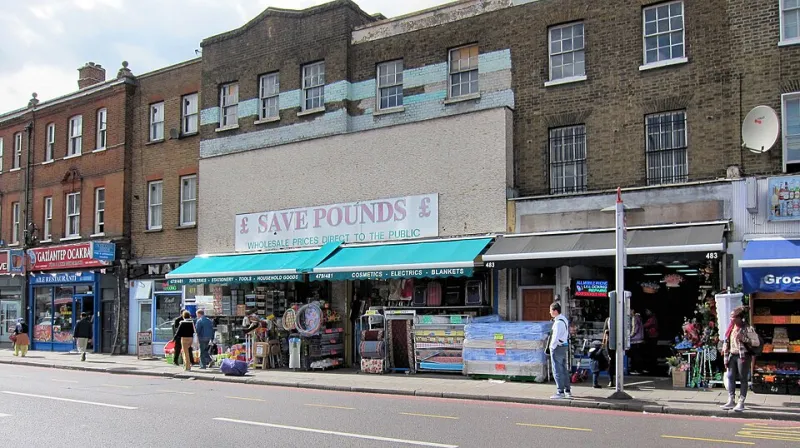
Photo: Alan Stanton, CC BY-SA 2.0, via Wikimedia Commons
An independent shopfront is doing several jobs at once. It is a window, a sign, a weather seal, a security barrier and, if you get it right, a piece of craft that makes people slow down. Stained glass can do all of that, but only if the commission is briefed for the street, the building and the hours after dark. A panel that looks lovely in a sunny workshop can turn into a dark, unreadable rectangle at 7pm in November.
Start with the building and the paperwork
Before patterns, check what you are allowed to change. A listed building will usually need listed building consent for alterations to the shopfront, glazing or frame. A conservation area may have extra local rules, and many councils publish shopfront design guidance. If you rent, read the lease: the freeholder may control the external appearance, signage and insurance. Planning permission may be needed for some signage or external lighting, and advertising consent is separate from listed building consent. Ask the local authority conservation officer early. A maker can advise, but they cannot grant consent.
Also think about fire escape, access, ventilation and how the panel will be cleaned. A beautiful window that blocks a fire exit or traps condensation is a problem in waiting.
Design for the pavement, not the drawing board
Stained glass on a shopfront is viewed at speed and from a distance. Keep the main message simple. A café may want its name, a studio may want a symbol or a colour code, a shop may want a pattern that frames the display without hiding it. At eye level, fine detail can disappear; from across the road, a fussy design can turn to mush. Work with negative space. Let clear or lightly textured glass do some of the work. If lettering is part of the design, test it at the actual size and from the actual pavement.
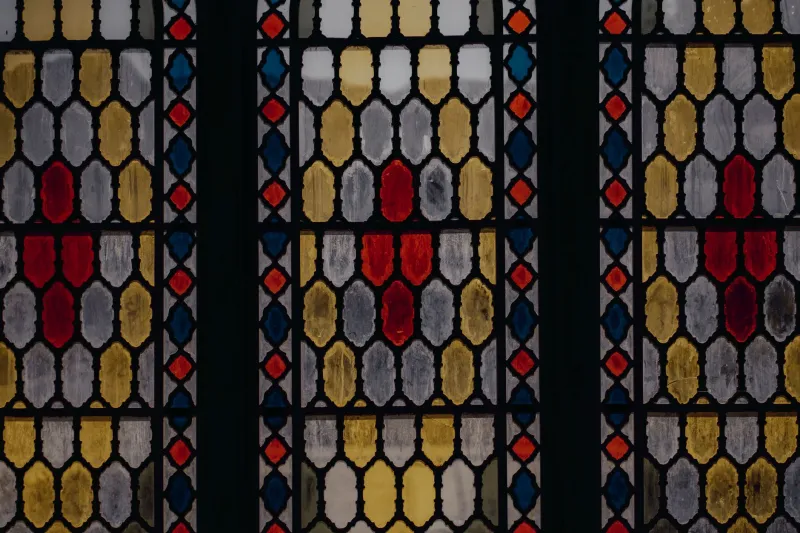
Remember that colour changes after dark. Deep blues and reds can go black without light; pale amber and clear textures hold up better. Painted details need light to read. If the window is also the shop sign, the design has to work with the interior lighting and the street lighting, not against them.
Lighting that helps rather than fights
Lighting should be part of the commission, not an afterthought. Options include discreet external spotlights, internal LED panels, edge-lit glass or a simple backlit box behind clear textured glass. Each has maintenance and heat implications. Old lead and painted glass should not be cooked by hot lamps. Use LED fittings with low heat output, and make sure there is access for replacement. Timers and sensors keep costs down. Shield the fittings so light falls on the glass rather than into neighbouring windows; in residential streets, glare is a real complaint.
The best test is a mock-up. Ask to see a sample panel or a section lit at night, from the pavement and from a passing car. Check whether the lettering reads, whether the colours hold, and whether the light spills where you want it.
Security and weather are not glamorous, but they matter
Leaded glass is not security glass. For a shopfront, plan protective glazing, laminated glass, an internal grille or a combination that suits the risk and the building. Do not seal an old leaded panel into a tight double-glazed unit without specialist advice; trapped moisture and thermal movement can damage it. The frame needs drainage and ventilation. Lead flashings, putty, timber or metal frames and saddle bars all need to be detailed for UK wind-driven rain. Ask how the panel will be removed for repair without destroying the surrounding shopfront.
Insurance is worth a conversation too. A bespoke stained-glass shopfront may need to be named on the policy, and the maker should confirm who is responsible during fabrication and installation.
Briefing a maker properly
Bring photographs, a measured drawing of the opening, the lease or freeholder’s requirements, any planning conditions, your brand colours and fonts, a lighting plan, a budget range and a maintenance plan. Ask for samples of glass and paint, a night-time mock-up, a written specification, a programme and a maintenance schedule. Clarify who handles protective glazing, who makes good the surrounding frame, and what warranty covers. If the shop is in a Victorian or Edwardian terrace, ask how the new work will sit with the old shopfront rather than overpower it.
In 2026, high-street budgets are tight, so spend where it shows: the main sightline, the lettering and the lighting. A smaller, well-lit panel that reads clearly can serve a business better than a large, dim one that only looks good in daylight. Commissioned well, a stained-glass shopfront is not just decoration. It is a sign that the lights are on and there is something worth stopping for.