Consent, Caution and Came: A Listed-Building Field Guide to Stained Glass
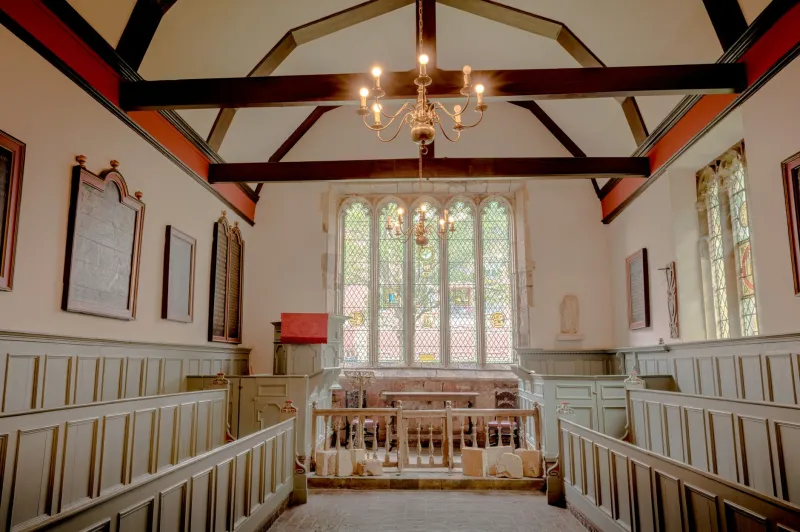
Stained glass and listed buildings can feel like a romance with a rulebook. The glass is often the thing people notice first — the reason a Georgian townhouse has a certain glow, or a village church feels like a village church — but it is also the element most likely to trigger a conversation with a conservation officer. That conversation does not have to be adversarial. It just needs to start early.
First, the difference between a repair and a change
In England and Wales, listed building consent — usually shortened to LBC — is handled by the local planning authority. Scotland and Northern Ireland have their own consent regimes, and churches in use may benefit from ecclesiastical exemption. But the principle is broadly similar: if work affects the special architectural or historic interest of a listed building, consent is likely to be needed. If it does not, it may not be.
The tricky part is that 'repair' and 'alteration' are not always obvious from the outside. Replacing a cracked quarry with matching glass, re-leading a window to the same design, or repairing ferramenta in situ can often be treated as like-for-like repair. But 'can often' is doing a lot of work in that sentence. A repair that quietly upgrades the glass, changes the leading profile, swaps hand-blown glass for float glass or introduces modern sealed units is an alteration in disguise. Conservation officers are very good at spotting the disguise.
A useful test is to ask whether a future historian could tell the difference. If the answer is yes, you are probably in consent territory. If the answer is no, you still need to be able to prove it — which is why documentation matters.
How conservation officers read a proposal
Conservation officers are not there to stop you. They are there to make sure the building still tells its story. When they look at a stained-glass proposal, they tend to ask a few practical questions. What is there now? What condition is it in? What exactly are you proposing to do? What materials will you use? Can the work be reversed? And have you recorded what exists before you disturb it?
A good proposal reads like a care plan, not a sales pitch. Method statements help. So do material samples, lead profiles and a clear explanation of why a change is necessary. If you are proposing new glass in a historic setting, expect questions about design, colour, texture and how the new work sits with the old. 'It will look nice' is not usually enough. 'It will sit in the existing ferramenta without altering the sightlines, and the glass will be mouth-blown in a matching palette' is much better.
Document before you disturb
Before any work begins, record what is there. Photograph the window in wide shots and close-ups, and take raking-light images so that painted detail and lead lines are visible. Note any inscriptions, signatures, maker's marks, solder joints and unusual quarries. If the glass is painted or stained, record the pigment and any evidence of earlier repairs. A simple condition survey with a keyed plan is worth more than a hundred phone snaps in a folder called 'windows'.
This is not bureaucracy for its own sake. Historic glass is fragile, and sometimes the most useful record is the one made before a pane is removed. If a piece breaks during repair, the documentation helps everyone understand what has been lost and how to replace it sensitively.
Common planning pitfalls
The first pitfall is starting work before consent is granted. The second is assuming that 'repair' covers replacement. The third is forgetting that internal glass can be listed too — a stained-glass door panel or an internal screen may be part of the listing, even if it is not visible from the street. Curtilage buildings and boundary walls can also catch people out.
Other common problems include using inappropriate modern materials, losing historic glass during re-leading, and failing to keep a paper trail. A folder of emails, photographs and method statements may not feel glamorous, but it is often the difference between a smooth consent process and a painful one.
A practical checklist
- Check the listing description and any local authority guidance before you plan the work.
- Ask the conservation officer whether they consider the work to be repair or alteration.
- Photograph and survey the glass before any intervention.
- Keep samples of existing glass, lead and putty where possible.
- Write a method statement that explains materials, techniques and reversibility.
- Record who does the work and keep a log of what was removed or replaced.
- Remember that ecclesiastical exemption is not a blank cheque — faculty jurisdiction has its own rules.
- If in doubt, ask for pre-application advice. It is cheaper than undoing work.
When to call in a specialist
Stained glass is one of those trades where enthusiasm can outrun experience. If the window is painted, medieval, Victorian or simply unusual, get a specialist to look at it before you make a plan. A short consultation can save months of consent wrangling and protect glass that has survived for generations.
At H&P Stained Glass, we like to say that light is the easy part. The hard part is care. In a listed building, care is the whole job — and consent is simply the paperwork that proves you meant it.