Encapsulation or a Second Skin? Stained Glass Behind Glass
There’s a hopeful phone call we get fairly often: “Can you seal our stained glass into a double-glazed unit?” The honest answer is sometimes yes, sometimes no, and occasionally “please don’t.” The deciding factor isn’t usually the beauty of the glass. It’s what you’re trying to protect it from, and how much room the panel needs to move, breathe and be repaired.
Putting stained glass behind glass sounds simple. In practice, there are two very different routes: encapsulation inside a sealed double-glazed unit, and secondary glazing added on the room side. Both keep the weather off. One is a long-term commitment; the other is a reversible layer. Knowing which you’re buying is half the battle.
Two jobs, two different solutions
An encapsulated unit takes a leaded or stained-glass panel and builds it into a sealed double-glazed unit, usually as the inner pane, with a clear protective pane facing the weather. The whole assembly is factory-sealed, often with a warm-edge spacer and desiccant. It can improve thermal performance, cut draughts and keep dirt and birds away from delicate lead and paint.
Secondary glazing leaves the original window exactly where it is and adds a separate glazed panel inside, usually in its own frame. It’s the traditional conservation answer because it’s removable, repair-friendly and doesn’t disturb the historic fabric. The cavity between the two glazing layers needs thought, though. A sealed cavity can become a condensation trap; a ventilated one behaves better.
What encapsulation does well
For a new commission, encapsulation can be designed in from the start. The lead lines can be sized for the unit, the glass stresses considered, the frame depth checked and the panel given room to expand. In a modern home, that can be a neat way to get a stained-glass feature without losing the benefits of double glazing.
It also protects the panel from the outside world. In a city, that means less grime and fewer pollutants settling into putty and lead. In a coastal spot, it means less salt and wind-driven rain. In a busy hallway, it means fewer knocks and less cleaning.
Condensation: the quiet failure
Sealed units fail. Not always, and not quickly, but edge seals do eventually give up. When they do, moisture gets between the panes. With ordinary glass, a misted unit is irritating. With stained glass, moisture can sit against lead, putty and painted glass in a place you cannot reach with a cloth.
That’s the heart of the problem. A failed encapsulated unit needs to be rebuilt, which means removing the panel, remaking the unit and probably scaffolding or temporary glazing. In a church, a failed unit high in a traceried window is not a five-minute job. The desiccant will absorb moisture for a while, but it has a limit. Once it’s saturated, the cavity is a small, damp atmosphere with your stained glass inside it.
Thermal movement and lead fatigue
Lead is forgiving, but it is not inert. It creeps and stretches with heat cycles. Glass expands and contracts at a different rate. In a traditional window, the panel has some freedom in its frame, and air can move around it. In a sealed unit, that ventilation is gone.
A dark stained-glass panel in a south-facing window can get surprisingly warm inside a sealed unit. Over years, that repeated expansion and contraction can work at solder joints and lead webs. Old lead is especially vulnerable; it may already be tired, crystallised or carrying a century of repairs. Encapsulation can protect a sound panel, but it can also lock in existing weakness.
Before encapsulating anything historic, have the lead and paint checked by a conservator or an experienced stained-glass maker. If the lead is brittle or the panel is bowing, sealing it is not a shortcut to preservation.
Ventilation and the case for secondary glazing
Secondary glazing has a reputation for being the cautious option, but cautious is not the same as second-best. A well-detailed secondary frame can include small ventilation slots or trickle vents, letting air move across the original glass and reducing condensation on its surface. It also keeps the historic window intact and accessible.
The trade-offs are real. Secondary frames can be chunky, they reduce sightlines, and the cavity between the panes needs cleaning access. A badly fitted secondary panel can trap damp air just as effectively as a failed sealed unit. It needs a proper frame, a sensible ventilation strategy and a fitter who understands old windows, not just u-values.
Listed buildings, churches and consent
In England, listed building consent is usually needed for works that affect the character of a listed building, and conservation officers tend to prefer reversible solutions. Encapsulation is often seen as irreversible because the historic panel is removed from its traditional frame and built into a modern unit. Secondary glazing is more likely to be acceptable, provided the frame and fixings are sensitively designed.
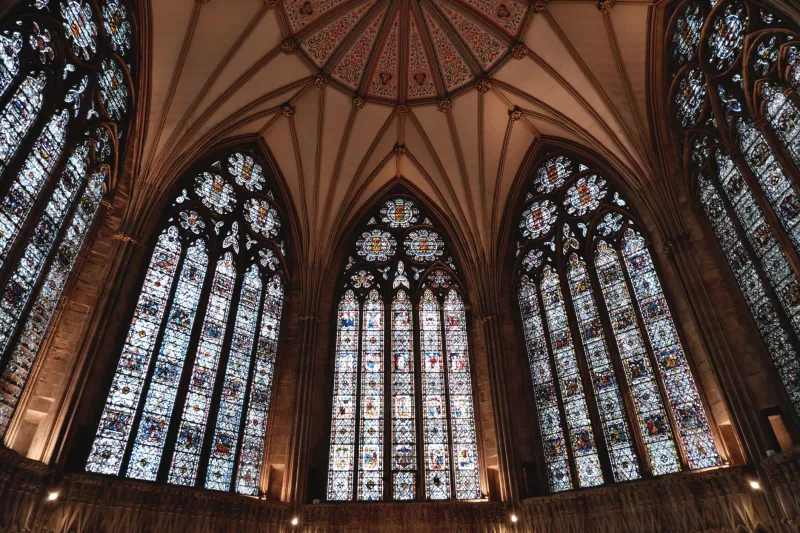
For churches, the faculty jurisdiction adds another layer. The Diocesan Advisory Committee will want to see why encapsulation is necessary, what it does to the appearance of the window and how the panel will be maintained. Similar heritage controls apply in Wales, Scotland and Northern Ireland, with different names and processes. Always ask before ordering glass. A phone call to the conservation officer or DAC is cheaper than a failed application.
The money, realistically
Prices vary with size, access and condition. In 2026, a straightforward secondary-glazing panel for a domestic window might cost £350 to £900, with conservation-grade or bespoke timber frames nearer £1,000 to £2,500. Encapsulating an existing stained-glass panel into a sealed unit commonly lands around £800 to £2,000 per window, before repairs, joinery, access or scaffold. A new stained-glass unit designed from scratch can run higher.
Church projects are a different scale because access, scaffolding and conservation input dominate. The cheapest option at the quote stage is not always the cheapest over twenty years. A sealed unit that fails early can cost more than a simple secondary frame that can be opened, adjusted and repaired.
A short decision list
- Is the panel historic or irreplaceable? Lean towards secondary glazing.
- Is the building listed or the window under faculty jurisdiction? Get advice first.
- Is the panel modern and designed for encapsulation? Encapsulation can work well.
- Has the lead been checked? If not, don’t seal it yet.
- Is the cavity ventilated or sealed? Be honest about the condensation risk.
- Can the unit be accessed for repair without a scaffold? If not, plan for failure.
- Does the frame have depth for the unit, the spacer and proper fixing? Check before measuring.
Stained glass likes air and a little movement more than we do. Sealing it behind glass can be a kindness, but only when the panel, the building and the budget all agree. Otherwise, the second skin becomes a trap.