Sunstruck Glass: Designing South-Facing Windows That Can Take the Heat
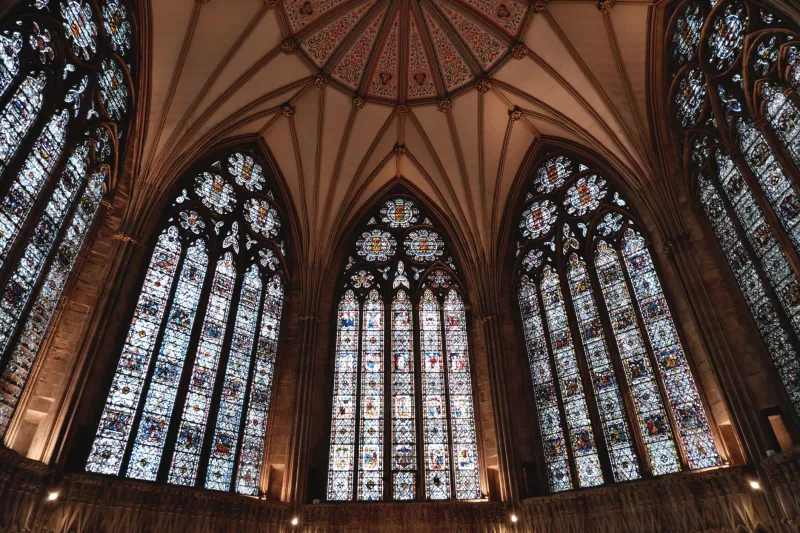
A south-facing window is the dream brief for many stained-glass commissions. The light is generous, the colours sing, and a hallway or landing can feel transformed by midday. But as UK summers grow warmer, that same sun is asking more of the glass than it did a generation ago. Designing for south-facing exposure is no longer just a question of picking a pretty palette. It is a small piece of thermal planning.
Start with the window, not the pattern
Before anyone sketches a rose or chooses a rippled amber, look at the opening itself. A deep Victorian reveal in a Brighton bay behaves differently from a slim-framed garden-room window in Bristol. The first traps a pocket of air and casts moving shadows; the second may receive direct sun for eight hours with little shade. Both can take stained glass, but they need different support, ventilation and colour choices.
In practical terms, ask three questions. How long does direct sun hit the glass in June and July? Is there anywhere for heat to escape once it has passed through? And is the panel protected from rain, wind and accidental knocks? A south-facing window that is beautiful but sealed tight is a greenhouse. A well-detailed one can be a delight.
What thermal stress actually does
Stained glass is not fragile in the way people sometimes imagine, but it does not like uneven heat. When one part of a panel is in full sun and another sits in shade, the glass expands at different rates. Add a dark red or deep blue piece that absorbs more heat, and the stress builds at the edges, at solder joints and where lead comes are tightly held by putty or frame.
Cracks often appear not in the hottest moment but when the sun moves and a shadow falls across a warm panel. The sudden cooling is the nudge. Lead came is more forgiving than copper foil in large south-facing panels because it can move slightly, but it also stretches and fatigues over time. A panel that was fine in a north-facing porch may sag in a sun-baked landing after fifteen or twenty years.
This is why support bars, tie wires and sensible panel sizes matter. A long south-facing window may need saddle bars or a reinforced frame, especially if it is high up and difficult to inspect. If you are commissioning new work for a sunny spot, say so clearly. A maker who knows the orientation can design the lead lines and support accordingly rather than treating the panel as a flat picture.
Colour is a heat decision as well as an aesthetic one
Dark colours absorb more solar heat. That does not mean banning deep reds, cobalt blues or rich greens from south-facing work. It means using them with awareness. Large uninterrupted areas of very dark glass in direct sun will run hotter than pale amber, gold-pink or soft green. Breaking up dark areas with lighter pieces, texture or narrower lead lines can reduce the risk without dulling the design.
Texture is useful too. Cathedrals and reeded glass scatter light and soften glare, which is welcome in a south-facing kitchen or stairwell. A highly textured surface can also hide minor surface marks and make the panel feel alive as the sun moves. If the window is overlooked, a mix of opacity and clear glass can give privacy without turning the room into a dark box.
For UK light, it is worth testing samples in the actual window. A colour that looks rich on a grey February day can look almost black in July. Borrow a few offcuts from your maker, tape them up for a week and watch how they behave at different times. That small experiment is more useful than any screen mock-up.
Ventilation, shading and protective glazing
Heat needs somewhere to go. If a stained-glass panel sits internally behind sealed secondary glazing, the gap between the two can become an oven. Protective glazing is still a sensible option in many homes, especially where the panel is low enough to be knocked or where the original glass is historic. But it should be ventilated. Small gaps, weep holes or a properly detailed frame can let warm air move rather than trap it against the lead.
External shading is often overlooked. A deep reveal, an awning, a mature tree or a simple external blind can cut the fiercest summer sun without losing winter light. In conservation areas or listed buildings, check what is permitted before adding anything visible from the street. Sometimes an internal blind or a removable linen scrim is enough.
If the window is a modern sealed unit with stained glass encapsulated inside, ask how the unit is specified. The glass and lead need room to move, and the cavity should be assessed by someone who understands both glazing and stained glass. A standard double-glazing salesperson may not be the right person to sign off a leaded panel.
Three installation scenarios
In a Brighton Victorian bay, the main risk is a wide south-facing panel with little shade and a lot of thermal movement. Here, a ventilated secondary glazing system, support bars and a palette that avoids huge dark slabs would be sensible. In a Bristol garden room, the issue may be glare and overheating in a modern slim frame. A textured panel with pale golds, plus external shading, can keep the room usable. In a Kent farmhouse with a low south-facing window, protection from knocks matters as much as heat, so toughened protective glazing with a ventilated gap is often the practical answer.
A 2026 commissioning checklist
Ask your maker how they will handle thermal movement, whether the panel needs support bars, how the protective glazing will be ventilated and what inspection routine they recommend. Keep written notes. Book a check every few years, particularly after a hot summer. Look for sagging lead, cracked pieces, loose putty, condensation behind protective glazing or white bloom on the lead. Small repairs are much cheaper than a collapsed panel.
South-facing stained glass can handle British sun. It just needs to be designed as a living piece of building fabric, not a painting that happens to be vertical. Get the heat, support and ventilation right, and the window will keep giving you colour long after the hottest afternoon has passed.